Constitutional Implications of Fundamental Importance

The question posed here must be asked of all in power and particularly from those who claim that the ‘power of Parliament knows no bounds’. Yet it is confirmed that we are Governed as a Constitutional Monarchy.
An Essay by John Bingley a layman.

The Question posed below deserves unequivocal response with full logical and legal explanation from any of those who have sworn to owe true allegiance and who might believe, act or assert otherwise.

The Limitation of The Crown places Constitutional duty upon the Monarch. The Royal Duty arising is to be upheld and maintained to the best of the Crown’s powers, Reign long. It is imposed by both Common Law and Statute being written and publicly acknowledged.

The Constitutional Limitations of the Monarchy are thus integral to the fundamental ‘duty of the Crown’, and the ‘Crown acting in Parliament’. The commands may not be ignored, undermined or contravened without their prior express repeal and or renouncement?

The Question:-

Please confirm that the true limitations of the Crown effect the imposition of a Constitutional boundary to the power of the Crown and the Crown acting in Parliament and to all and any use of its prerogative by all who owe true allegiance; thus the extant Duty of the Crown is thus the Sovereign Duty for all Governance?

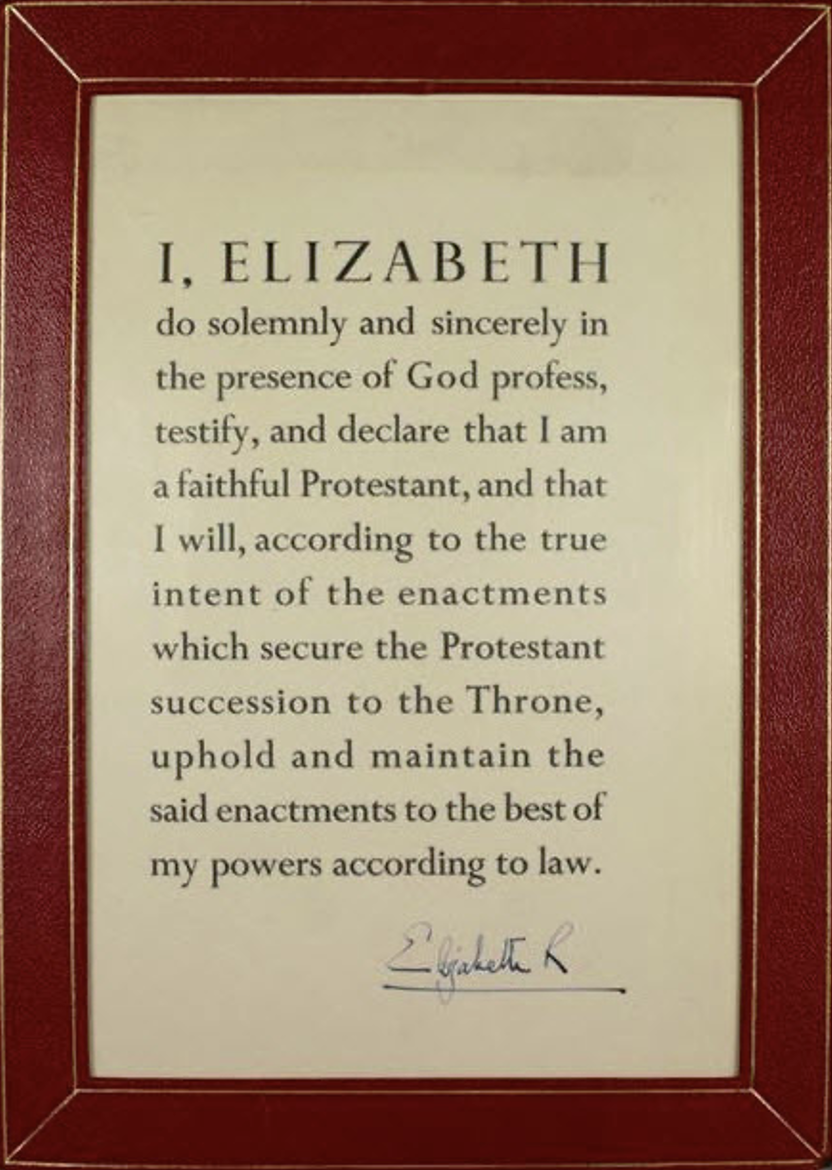
Her Majesty Queen Elizabeth II
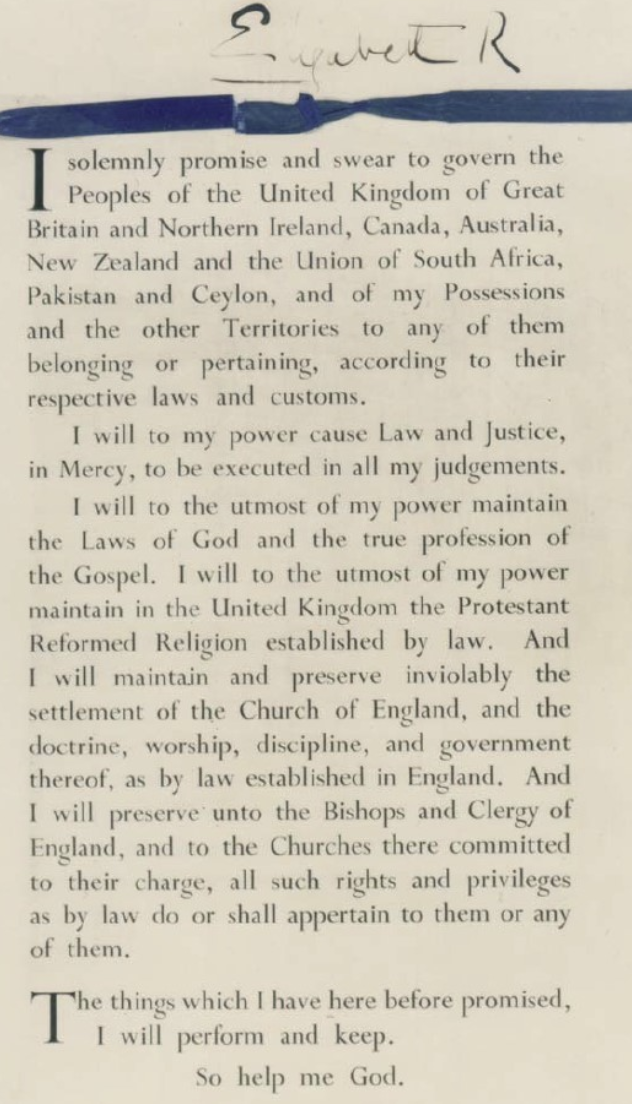
Coronation Oath and Accession Declaration Oath

The Constitutional Obligations imposing the Crown’s Duty in Governance.
The Sovereign nature of its importance is to :-.
Secures the Birthright to our Constitutional Rights and Liberties with Justice under the Rule of Our law.
Parliamentary information and legal texts:
‘Swearing in’

Members of both Houses of Parliament are required by law to take an oath of allegiance to the Crown.

MPs cannot take their seat, speak in debates, vote or receive a salary until taking the oath or affirmation. They could also be fined £500 and have their seat declared vacant “as if they were dead” if they attempted to do so.

The same rule applies to Members of the Lords.

MP’s Oath of Allegiance
I swear by Almighty God that I will be faithful and bear true allegiance to His Majesty King Charles, his heirs and successors, according to law. So help me God.
King Charles’s Coronation Oath
Will you solemnly promise and swear to govern the Peoples of the United Kingdom of Great Britain and Northern Ireland, your other Realms and the Territories to any of them belonging or pertaining, according to their respective laws and customs?
The King replies
I solemnly promise so to do.
The Archbishop says
Will you to your power cause Law and Justice, in Mercy, to be executed in all your judgements?
The King replies
I will.
The King kneels at the Chair of Estate. The Archbishop says
Will you to the utmost of your power maintain the Laws of God and the true profession of the Gospel? Will you to the utmost of your power maintain in the United Kingdom the Protestant Reformed Religion established by law? Will you maintain and preserve inviolably the settlement of the Church of England, and the doctrine, worship, discipline, and government thereof, as by law established in England?
And will you preserve unto the Bishops and Clergy of England, and to the Churches there committed to their charge, all such rights and privileges as by law do or shall appertain to them or any of them?
The King replies
All this I promise to do.
King Charles Swore His Accession Declaration Oath the wording is as Her Majesty Queen Elizabeth’s.
It has been Acknowledged in correspondence with:-
The Cabinet Constitutional unit of the Cameron Government:-
John Penose MP (Parliamentary Secretary)

Finally Mr Bingley is absolutely right to recognise the importance of the Coronation Oath Act1689 and the Accession Declaration Act 1910, and we agree that they do oblige the Monarch to fulfil the legal obligations that are contained in them.

And via my MP of the Blair premiership:-
“The Prime Minister has asked me to arrange for a Minister in the Home office to reply to you direct.”
“The Coronation Oath. I am replying in light of my Constitutional responsibilities. I can confirm the Coronation oath is a solemn undertaking by the Sovereign and is regarded as binding throughout Her reign. Her Majesty would not be advised to give Her assent to a provision which contradicted that oath. Yours Ever Jack Straw”
And in Hansard
the following quote which was confirmed in the House on
the 15. 10. 1996. by John Major Prime Minister.
“The Coronation Oath is indeed regarded as a solemn undertaking by the Sovereign which is binding throughout Her reign. Ministers would not advise Her Majesty to sign into law any provision which contradicted Her Oath.”